Recent Policy Changes in India
- White rice exports allowed with a Minimum Export Price (MEP) of $490/tonne
- Export duty on parboiled, brown, and husked rice reduced from 20% to 10%
Impact on Global Rice Prices
- Thailand cut export prices by 10%
- Vietnam prices expected to decline
- Asian rice prices fell between $10 and $72 per tonne after India eased export curbs
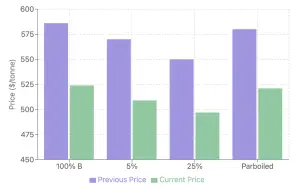
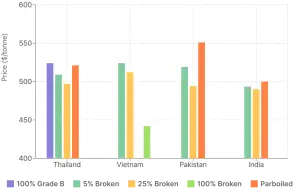
Current Price Comparison (FOB, $/tonne)
Thailand
– 100% grade B white rice: $522-$526(down from $586)
– 5% white rice: $507-$511 (down from $570)
– 25% white rice: $495-$499 (down from $550)
– Parboiled: $519-$523

Vietnam
– 5% broken: $522-$526
– 25% broken: $512-$516
– 100% broken: $440-$444
Pakistan
– Parboiled: $549-553
– 5% white rice: $517-521
– 25% broken: $492-496
India
– 5% broken: $491-496
– 25% broken: $488-492
– Parboiled: $498-502 (including 10% export duty)
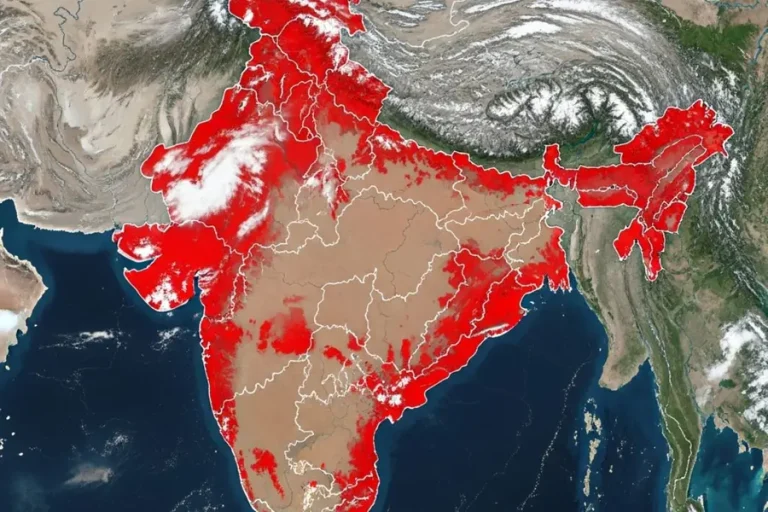
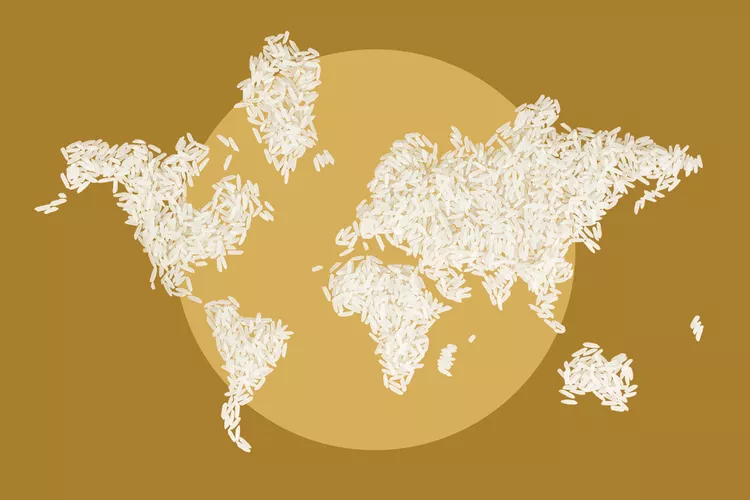 EconomyThe World Rice Map: Where It Is Grown, Traded And Needed Most
Market Dynamics
- Indian exporters seeing increased inquiries from old buyers
- India’s price competitiveness: $25-30/tonne (down from $100/tonne two years ago)
- Basmati prices dropped to around $1,000/tonne, MEP of $950/tonne removed
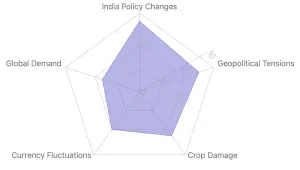
Key Factors to Watch
1. Geopolitical tensions in the Middle East
– Potential for wild currency fluctuations in Thailand, Vietnam, and Pakistan
– Indian rupee expected to remain steady
2. Crop damage in major producing countries
– Potential 5 million tonne production drop in Thailand, Vietnam, and Myanmar
– Damage assessment pending in Indian states like Bihar, Bengal, Chhattisgarh, Telangana, and Andhra Pradesh
Outlook
- Global rice production trends to become clearer by end of the month
- Market volatility expected due to only one-tenth of global production being exported
- India’s competitive edge may shrink if competing countries’ currencies depreciate sharply
Conclusion
The global rice market is currently characterized by increased competition and lower prices following India’s policy changes. However, geopolitical tensions and potential crop damage introduce significant uncertainties. With only a fraction of global rice production traded internationally, these factors could lead to heightened market volatility. Stakeholders should remain vigilant, closely monitoring production assessments, currency fluctuations, and trade policies in the coming weeks, as these will be crucial in shaping the market’s direction.