Australia Fertilizer Imports Face Rising Pressure as 5 Strategic Moves Signal Bearish Supply Outlook
Australia’s emergency response to the fertilizer supply crisis triggered by the Strait of Hormuz closure offers a case study in how import-dependent nations can manage agricultural input disruptions during geopolitical conflict.

Australia Fertilizer Imports and the Scale of Gulf Dependency
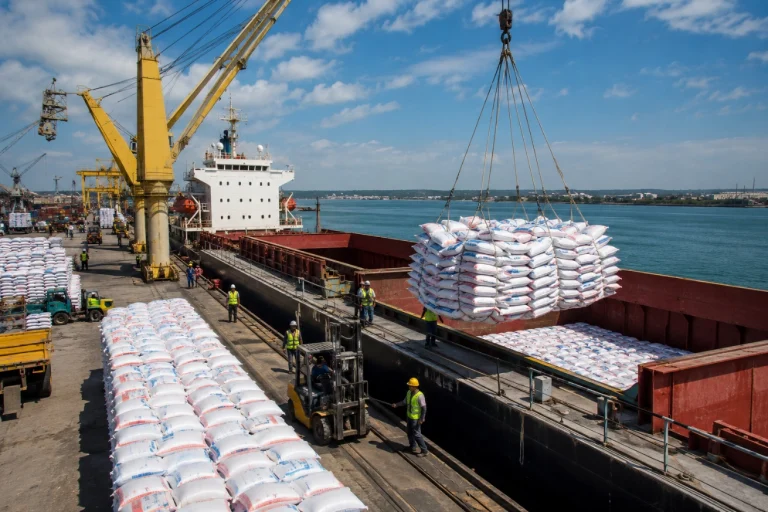
Australia consumed 8.7 million tonnes of fertilizer in 2024, of which imports accounted for 7.9 million tonnes, representing over 90% of total usage. Urea alone comprised 44% of national consumption, with imports exceeding A$1.5 billion in value.
 Energy & ClimateUrea Prices Crash Over 50% in Bearish Tender
The country imported 64% of its urea from the Persian Gulf in 2025, according to Australian Bureau of Statistics trade data. That concentration created a structural vulnerability that extended well beyond routine price volatility into supply availability risk.
Australia has no domestic means of manufacturing urea after the Gibson Island facility near Brisbane shut down in 2023, with its operators citing an inability to secure affordable long-term gas supply. Domestic production capacity has declined sharply to just 1.3 million tonnes across all fertilizer types, representing only 15% of total consumption.
This import dependency meant that when the Strait of Hormuz was effectively closed following the escalation of the US-Iran conflict on 28 February 2026, Australia’s agricultural sector confronted an immediate and severe supply constraint during peak seasonal demand.
Strait of Hormuz Disruption Reshapes Global Fertilizer Flows
The closure of the Strait of Hormuz has been the largest disruption to world energy supply since the 1970s energy crisis. The impact on fertilizer markets has been equally transformative.
Up to 30% of globally traded fertilizer products, roughly 16 million tonnes per year of nitrogenous, phosphate, and sulphur products, transit the Strait of Hormuz, according to trade data from Kpler. The Persian Gulf region accounts for an estimated 30 to 35% of global urea exports and 20 to 30% of ammonia exports.
Nearly a million metric tons of fertilizer cargo are physically stranded in the Gulf, with major producers declaring force majeure. Saudi producer Maaden has taken two of its three ammonia units offline, and QatarEnergy’s ammonia production was halted following drone strikes in early March.
Australian granular urea prices reached A$1,250 to A$1,340 per tonne by mid-March 2026, representing a 55% price escalation from pre-disruption levels. By mid-April, Argus assessed granular urea at A$1,420 to A$1,430 per tonne, reflecting a 68% increase over a matter of weeks.
The Strait of Hormuz disruption has also triggered cascading effects beyond nitrogen fertilizers. The Gulf region provides close to 50% of globally traded sulphur, a critical input for producing sulphuric acid essential in the processing of phosphate fertilizers. A previously overlooked shortage of sulphur is now cascading into phosphate fertilizer production worldwide.
Government as De-Risker: How Strategic Reserve Powers Enabled Emergency Action
The Australian Government’s response to the fertilizer crisis illustrates a model of proactive supply chain management in which public institutions absorb financial risk to prevent private sector paralysis. The central mechanism is the expansion of Export Finance Australia’s mandate under strategic reserve legislation.
The government formally expanded Export Finance Australia’s mandate on 30 March 2026, granting new powers to underwrite international purchases of agricultural inputs under strategic reserve legislation.
Under the strategic reserve powers finalised in March, Export Finance Australia will back overseas fertilizer and fuel purchases, enabling the government to work with companies to lock in shipments and get supplies into the country faster. The framework operates through risk-sharing arrangements where the government provides downside protection against rapid price movements, enabling companies to secure forward shipments without exposure to post-purchase market declines.
The government will put up taxpayer dollars as insurance for importers facing rapid and volatile price changes, with the goal of guaranteeing supply in time for both the current and upcoming seasons.
Two companies received government backing: CSBP Limited, a Wesfarmers subsidiary operating in Western Australia, and Incitec Pivot, which runs a national fertilizer distribution network. Both possess existing relationships with international suppliers, vessel chartering capacity, and regional storage infrastructure necessary for effective distribution.
Industry Minister Tim Ayres framed the intervention as a structural risk management tool rather than a market subsidy, noting that the strategic reserve powers were designed to absorb volatility that would otherwise fall directly on farmers.
Parallel with Fuel Security Measures
The fertilizer underwriting deals mirror similar agreements struck with fuel companies Ampol and Viva Energy earlier in April. The same strategic reserve powers have been used to secure approximately 100 million additional litres of diesel from Brunei and South Korea. Australia is treating fertilizer with the same strategic weight as fuel, recognising that food security is inextricably linked to energy and input security.
Urea Supply Chain Diversification: The Indonesia Deal and Regional Pivot
Australia will purchase 250,000 tonnes of agricultural-grade urea from Indonesia under a deal between Incitec Pivot Fertilisers and PT Pupuk Indonesia, facilitated by both governments at the highest diplomatic levels.
Pupuk Indonesia has assured its readiness to support the export, with the capacity to produce up to 9.4 million tonnes of urea annually. This year’s output is estimated at 7.8 million tonnes against 6.3 million tonnes of domestic demand, indicating a significant surplus.
The 250,000-tonne deal, however, covers only approximately 20% of the seasonal shortfall. Agriculture Minister Julie Collins acknowledged that the urea supply chain remains under stress despite the intervention. Deliveries are scheduled between May and December at prevailing market prices, with no fixed price set as part of the arrangement.
The government has also engaged diplomatically with Brunei, which supplies 11% of Australia’s fertilizer urea needs, securing a commitment that the Southeast Asian nation will not impose export restrictions on fertilizer supply to Australia. Malaysia has entered discussions regarding production allocation for Australian procurement.
Southeast Asia maintains substantial fertilizer production capacity that exceeds regional demand, with regional production reaching 13.5 million tonnes in 2025 while local consumption approximated 8.15 million tonnes, yielding 5.35 million tonnes of potential export capacity.
Food Security Risk: The Shortfall and Its Consequences
Despite the Indonesian deal and ongoing government intervention, food security risk remains elevated. Australia is still 1.25 million tonnes short of the urea needed for the current season.
Grocery prices may immediately rise 3% to 4% as higher fuel and fertilizer costs linked to the conflict feed through the economy, according to Treasury estimates cited by Minister Collins.
The timing is critical. Winter crop planting is underway across Australia, and nitrogen fertilizer decisions for cereals, canola, and pasture must be made now. Multiple suppliers indicate that growers are actively considering crop portfolio changes from standard wheat and canola to legumes or pulses that require substantially less fertilizer input, a strategic shift that could signal permanent changes in Australian agricultural land use patterns.
FAO projections indicate that global fertilizer prices could average 15 to 20% higher in the first half of 2026 if the crisis persists. FAO Chief Economist Maximo Torero has warned that even modest reductions in fertilizer application can result in disproportionately large declines in crop yields, particularly where baseline usage is already near efficient levels.
Lessons for Import-Dependent Nations
Australia’s response offers a structured playbook for nations facing similar agricultural input vulnerabilities. Five elements of the Australian model stand out as transferable policy instruments.
First, the classification of fertilizer as a strategic commodity comparable to fuel reserves provides the legal foundation for government intervention. Without the strategic reserve legislation enacted in March, the underwriting mechanism would not have been available at the speed required.
Second, the use of government-backed financial guarantees rather than direct procurement preserves market-based distribution while absorbing the price risk that private importers cannot bear during extreme volatility. The government is not purchasing and distributing fertilizer through a state-run network; it is enabling CSBP and Incitec Pivot to use their existing logistics infrastructure and supplier relationships with reduced financial exposure.
Third, the diversification of supply away from the Persian Gulf, actively pursued through diplomatic channels with Indonesia, Brunei, and Malaysia, demonstrates the importance of establishing trade relationships before a full-scale crisis materialises.
Fourth, transparent communication about the limitations of intervention has been a critical feature of the Australian approach. The acknowledgment that 250,000 tonnes covers only 20% of the shortfall set realistic expectations for farmers and markets, preventing false confidence.
Fifth, the integration of food, energy, and input security into a single strategic framework recognises that modern agricultural systems cannot function without industrial inputs whose supply chains overlap with energy corridors. The parallel deployment of strategic reserve powers for both fuel and fertilizer imports reflects this integrated approach.
Outlook: A Season Under Pressure
Australia’s agricultural sector faces a protracted period of input supply stress. Even if the Strait of Hormuz reopens fully, the recovery of Gulf fertilizer production and trade flows will take months. The Perdaman Ceres facility in Western Australia, a A$4.5 to A$6.4 billion investment that would establish domestic urea production capacity of 2.3 million tonnes annually, is not expected to come online until 2027 at the earliest.
In the interim, Australia’s dependence on imported urea remains a structural vulnerability. The government’s strategic reserve framework has demonstrated that emergency intervention can stabilise supply chains and buy time, but it is not a permanent substitute for diversified production capacity and resilient trade corridors.
For other nations watching Australia’s experience, the central lesson is clear: the time to establish strategic frameworks for agricultural input security is before a crisis, not during one. The legislative, financial, and diplomatic architecture that enabled Australia’s rapid response was assembled over preceding months. Countries that lack equivalent structures will find themselves less able to respond when the next supply shock arrives.