Production Contraction Across All Major Cereals
Global grain supply is entering a period of rebalancing after record or near-record harvests in 2025-26. The U.S. Department of Agriculture’s May 12 World Agricultural Supply and Demand Estimates report projects production declines across wheat, corn, and rice simultaneously, a convergence that has not occurred in over a decade.
The report, which marks USDA’s first detailed balance sheet for the 2026-27 marketing year, paints a picture of tightening fundamentals. Global wheat output is forecast at 819.1 million tonnes, down from a record 843.8 million in the prior season. Global corn production is projected at 1.295 billion tonnes, falling 17.3 million from the previous year’s record. Global rice production is expected to decline 5.0 million tonnes to 537.8 million, the first year-on-year decrease since 2015-16.

Consumption, however, shows no sign of retreating in step with supply.
Wheat Production Decline Reshapes Export Landscape
The wheat production decline is the most pronounced of the three cereals in absolute terms. Nearly 25 million tonnes of output are being shed from the global balance sheet, with major exporting countries accounting for the bulk of the reduction.
U.S. wheat production is forecast at 1.561 billion bushels, down 424 million from 2025-26, primarily on sharply reduced Hard Red Winter output. The all-wheat yield projection of 47.5 bushels per acre is 5.8 bushels below last year’s record. If realized, U.S. wheat output would be the lowest since 1972.
The European Union, Argentina, and Australia are all projected to harvest smaller crops as well. EU production is forecast at 136 million tonnes, down from 145 million. Argentina is expected to fall to 21 million tonnes from 28 million, while Australia drops to 30 million from 36 million.
Russia, meanwhile, remains the world’s largest wheat exporter with projected output of 86 million tonnes. However, Moscow’s ability to fully compensate for the collective decline among other exporters is limited. Global wheat trade is projected to fall 12 million tonnes to 211.7 million, as reduced import demand from North Africa and the Middle East partially reflects improved domestic harvests in those regions.
Projected 2026-27 global wheat ending stocks stand at 275 million tonnes, a decline of 4.2 million from the prior year. U.S. ending stocks are forecast to fall 18 percent to 762 million bushels, driving the season-average farm price to $6.50 per bushel: up $1.50 from 2025-26.
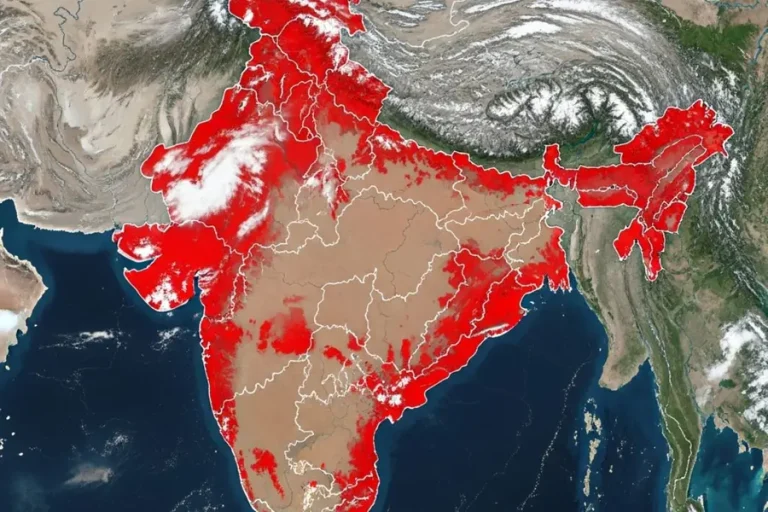
 EconomyThe World Rice Map: Where It Is Grown, Traded And Needed Most
India’s Return to Wheat Exports
India’s re-entry into the global wheat market adds an important variable. In February 2026, the Government of India lifted its nearly four-year ban on wheat exports, approving a calibrated quota of 2.5 million tonnes of raw wheat and an additional 500,000 tonnes of wheat products. The decision followed a record harvest projected above 118 million tonnes and buffer stocks of 18.2 million tonnes with the Food Corporation of India, more than double the mandatory requirement.
However, the practical impact on global trade may be limited. Indian wheat remains priced above most competitors due to the minimum support price structure. Trade participants have noted that Indian shipments are likely confined to nearby destinations in South Asia and the Middle East rather than competing head-to-head with Russian or Australian origin cargoes on a freight-inclusive basis.
Nevertheless, the policy shift is significant. India’s simultaneous role as the world’s dominant rice exporter, accounting for 40 percent of global trade, and its return as a wheat supplier positions New Delhi as one of the most consequential actors in the 2026-27 grain season.
Corn Ending Stocks at Decade Lows
Corn ending stocks are projected to fall to 277.5 million tonnes globally, which the USDA notes would be the lowest level since the 2013-14 marketing year. Global consumption is expected to rise to a record 1.315 billion tonnes, outpacing production by 19.4 million tonnes and necessitating a significant drawdown of reserves.
The U.S. corn crop is forecast at 16.0 billion bushels, down 6 percent from 2025-26 on lower planted area and yields. Corn planted area of 95.3 million acres is down 3.5 million from a year ago, reflecting a shift toward soybeans driven by favorable crush margins and strong demand for soybean oil in biofuel production. The U.S. season-average corn price is forecast at $4.40 per bushel, up 25 cents.
Brazil and China offer partial offsets. Brazil’s corn crop is projected at 139 million tonnes, up 4 million from the prior season. China’s output is also expected to rise on expanded area. But Argentina, South Africa, Mexico, Ukraine, and Turkey are all forecast to produce less corn than in 2025-26.
The feed sector remains the primary driver of global corn demand, with expanding industrial applications, particularly fuel ethanol production in South America and South Asia, adding structural upward pressure. Feed use in China, Brazil, Vietnam, India, and Mexico accounts for the largest absolute consumption increases.
Corn ending stocks among major exporting countries are projected to decline broadly. The United States accounts for the largest single reduction in reserves, with ending stocks falling 185 million bushels to 1.957 billion, representing 12.1 percent of use.
Rice Consumption Hits Record Amid Falling Output
Rice consumption is projected to rise to a record 541.4 million tonnes in 2026-27, while global production contracts to 537.8 million tonnes. The resulting deficit of 3.6 million tonnes will be drawn from existing stocks, reducing global ending inventories to 192.7 million tonnes.
India, Burma, and the United States account for the largest production declines. U.S. rice production is projected at 175.2 million hundredweight, down 15 percent on lower harvested area. The U.S. season-average rice price is forecast at $13.50 per hundredweight, up from $12.10 in 2025-26.
On the demand side, India’s rice use is forecast at a record 128 million tonnes, driven by population growth and continued government distributions under the Public Distribution System. Sub-Saharan Africa also continues to consume rice at record levels, making the region increasingly dependent on imports.
India is expected to ship 25 million tonnes of rice in 2026-27, reinforcing its position as the world’s leading exporter by a wide margin. Competitively priced Indian exports are expected to limit export growth from other major Asian suppliers, including Thailand, Vietnam, and Pakistan.
Global rice trade is projected to rise to a record 63 million tonnes. China’s rice use, however, is expected to decline 2.1 million tonnes to 145.1 million, reflecting a declining population and shifting consumer preferences.
Thinning Buffers Raise Vulnerability
The simultaneous drawdown of ending stocks across wheat, corn, and rice narrows the margin of safety available to global markets. Wheat stocks are at 275 million tonnes, corn at 277.5 million, and rice at 192.7 million: all declining from the prior year.
This erosion of buffers has direct implications for price sensitivity and supply chain resilience. With production falling below consumption in corn and rice, and wheat consumption only marginally below the reduced output, the 2026-27 season carries an elevated risk profile.
Weather disruptions, trade policy interventions, or logistics bottlenecks during the Northern Hemisphere planting and growing season could amplify the supply shortfalls already baked into current forecasts. U.S. winter wheat conditions are already under stress, with the USDA’s weekly Crop Progress report showing just 28 percent of the Hard Red Winter crop rated good to excellent, sitting between the two worst crops of the past decade.
Shifting Trade Dynamics
The competitive landscape is evolving. The U.S. share of global corn trade is expected to decline modestly as Brazil and Ukraine expand exports. Russia remains dominant in wheat. India is now active across both wheat and rice export markets, a dual-commodity presence that gives New Delhi outsized influence over global cereal prices.
Brazil’s expanding corn production and its position as the world’s top soybean exporter make South American supply chains critical to the 2026-27 outlook. Conversely, U.S. export competitiveness faces headwinds from higher domestic prices across all three grains, limiting the volume available for foreign markets.
For import-dependent regions, particularly Sub-Saharan Africa and parts of South and Southeast Asia, the tightening global grain supply outlook heightens vulnerability to price spikes or sudden export restrictions by major suppliers.
Outlook for 2026-27
The USDA’s May WASDE establishes 2026-27 as a season of recalibration. After successive years of record or near-record harvests, the simultaneous contraction in wheat, corn, and rice production is compressing available global grain supply at a time when consumption continues to grow.
Corn ending stocks at their lowest in over a decade, rice consumption exceeding output for the first time since 2015-16, and wheat production declining by nearly 25 million tonnes collectively point toward a more structurally tight market. The season-average farm price increases projected by the USDA across all three grains reflect this reality.
Markets will be closely watching the Northern Hemisphere growing season, the pace of India’s wheat and rice exports, and whether Brazil’s corn crop materialises as projected. The 2026-27 balance sheets are, as the USDA itself cautioned, highly tentative. But the direction of the data is clear: the global grain supply cushion is thinning.